
Effects of Dirty Water Tanks on Water Taste and Quality
- SURESH K
- Sep 8, 2025
- 5 min read

Water is the essence of life. Every household, commercial building, and industrial facility relies on clean, safe water for daily use—whether it’s for drinking, cooking, bathing, or cleaning. Yet, behind the convenience of turning on a tap, there lies an often-overlooked component of the water supply system: the water storage tank.

Over time, if these tanks are not regularly inspected and cleaned, they can become a breeding ground for sediments, bacteria, algae, and other contaminants. The consequences are more than just aesthetic. A dirty water tank directly affects water taste, odour, colour, and overall quality, creating potential health risks for everyone who consumes or uses that water.
This blog explores the various ways dirty water tanks impact water taste and quality, the risks associated with neglect, and why regular cleaning is essential for both residential and commercial properties.
1. Why Water Tanks Become Dirty
Even though water supplied from municipal systems is treated, it can still carry tiny amounts of sediment, minerals, or microorganisms. When water is stored in tanks for days or weeks, these substances settle at the bottom or cling to tank walls. Over time, the following problems occur:
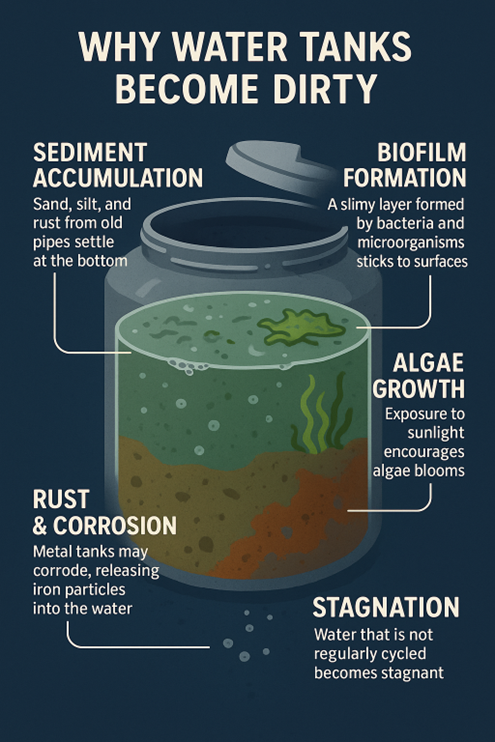
Sediment Accumulation: Sand, silt, and rust from old pipes settle at the bottom of the tank.
Biofilm Formation: A slimy layer formed by bacteria and microorganisms sticks to surfaces.
Algae Growth: Exposure to sunlight through cracks or translucent lids encourages algae blooms.
Rust & Corrosion: Metal tanks may corrode, releasing iron particles into the water.
Stagnation: Water that is not regularly cycled becomes stagnant, losing freshness.
Each of these factors contributes to a decline in water quality—and eventually alters how the water tastes, smells, and looks.
2. Impact on Water Taste
One of the earliest signs of a dirty water tank is a change in taste. Clean water should be neutral in taste—fresh, crisp, and free from noticeable flavours. When tanks are neglected:
Metallic Taste: Rust from corroded tank walls or old plumbing can dissolve into the water, giving it a bitter or metallic taste.

Earthy or Musty Taste: Sediments and algae cause water to develop a soil-like or musty flavour.
Chlorine Alteration: If chlorine-treated water interacts with organic matter, it forms compounds that distort the intended neutral taste.
Stale Taste: Stagnant water loses its oxygen content, leading to a flat, unpleasant taste.
For households, this affects drinking water, tea, coffee, soups, and even cooked meals. In commercial settings—such as restaurants, cafés, or hotels—the impact on taste directly influences customer satisfaction.
3. Effects on Odour and Smell
Taste and smell are closely linked. A dirty tank often produces foul odours that signal contamination:
Rotten Egg Smell: Often caused by bacteria reacting with sulphates in water to produce hydrogen sulphide gas.
Musty or Mouldy Smell: Indicative of algae, fungi, or mould growth inside the tank.
Chemical Smells: Corroded or deteriorated tank linings release chemicals that taint water odour.
Unpleasant odours make water unsuitable for consumption and discourage people from drinking enough, leading to dehydration risks in workplaces, schools, and homes.
4. Visible Changes in Water Quality
Beyond taste and smell, dirty water tanks visibly alter the appearance of water:
Cloudy or Turbid Water: Sediment and suspended particles reduce clarity.
Discoloured Water: Brown, yellow, or greenish tints often come from rust, algae, or bacterial colonies.

Floating Particles: Dead insects, leaves, or tank debris can end up in tap water.
While some of these changes may seem cosmetic, they are clear warnings of deeper contamination issues.
5. Health Risks of Contaminated Tank Water
The decline in water taste and quality is more than just inconvenient—it poses significant health threats:
Bacterial Infections: Tanks harbour bacteria such as E. coli, Salmonella, and Legionella, which cause diarrhoea, fever, and respiratory illnesses.

Skin Irritations: Using dirty water for bathing may cause rashes, dryness, or allergic reactions.
Heavy Metal Toxicity: Rust or corroded metal tanks leach iron, copper, or even lead into the water. Long-term exposure is dangerous for the kidneys and nervous system.
Gastrointestinal Problems: Contaminated water often leads to stomach pain, nausea, and food poisoning.
Children, the elderly, and people with weak immune systems are particularly vulnerable.
6. Commercial & Industrial Implications
For businesses, water quality is directly tied to reputation and compliance:

Food & Beverage Outlets: Restaurants risk serving meals with odd-tasting water or ice cubes, which customers quickly notice.
Hotels & Apartments: Guests judge overall hygiene based on water clarity and odour in bathrooms or kitchens.
Healthcare Facilities: Hospitals require ultra-clean water; dirty tanks pose severe health risks to patients.
Factories & Workshops: Poor water quality affects machinery cooling systems and product consistency.
A single complaint or inspection failure can damage brand trust and lead to financial penalties.
7. Psychological Impact
It’s not just the physical risks—dirty tank water also affects peace of mind. Families may feel anxious about giving children tap water, while employees may avoid drinking at work, leading to lower morale and productivity. Clean water isn’t just about safety—it also builds confidence and comfort.
8. Importance of Regular Tank Cleaning
To prevent these issues, regular water tank maintenance is essential. Experts recommend:
Inspection Every 6 Months: Checking for cracks, leaks, or rust.
Cleaning Annually (Minimum): Emptying, scrubbing, disinfecting, and rinsing the tank.
Professional Servicing: Using certified contractors ensures tanks are cleaned according to safety standards.
Water Quality Testing: Conduct periodic lab tests for bacteria, pH balance, and heavy metals.
These measures guarantee that water remains safe, fresh, and pleasant to consume.
9. Practical Steps to Maintain Tank Hygiene
Install a Proper Lid: Prevents insects, dust, and debris from entering.
Keep Tanks in Shade: Reduces algae growth caused by sunlight exposure.
Use Food-Grade Materials: Modern polyethylene tanks resist rust and corrosion better than metal ones.
Flush Systems Regularly: Prevents stagnation and sediment buildup.
Hire Professionals: DIY cleaning may miss hidden contaminants or damage the tank structure.
10. Conclusion
Dirty water tanks silently undermine water taste, quality, and safety. What begins as a faint odour or a slightly metallic taste can escalate into serious contamination issues that endanger health, harm reputations, and create unnecessary expenses.
Clean water should never be taken for granted. Whether in a home, office, or industrial facility, regular inspection and cleaning of water tanks ensure fresh-tasting, odour-free, and safe water. By investing in proper maintenance, we protect not only our health but also our peace of mind and the trust of those who depend on us.
Alpha & Omega Trinity Pte Ltd
Don't worry — we've got you covered with professional services in:
🔧 Plumbing Services
💧 Pump & Water System Services
❄️ Air Conditioning & Cooling Services
🛠️ General Maintenance
+65 8151 8857


Comments