
How to Know If You Have a Concealed Pipe Leak — 7 Warning Signs Singapore Homes Ignore
- SURESH K
- Nov 21, 2025
- 4 min read


Concealed pipe leaks are one of the most common yet most damaging plumbing issues in Singapore homes. Unlike exposed pipes where leaks are visible, concealed pipes run behind walls, floors, ceilings, risers and tile surfaces. When these pipes start leaking, the signs are usually subtle — until the damage becomes serious.
This guide highlights the 7 key warning signs that homeowners often overlook, and explains how to identify, prevent and repair concealed pipe leaks effectively.
1. Why Concealed Pipe Leaks Are Difficult to Detect

In most Singapore HDB and condo units, water pipes are hidden for safety and design reasons. They are typically concealed in:
Bathroom walls
Kitchen cabinets
False ceilings
Behind tiles
Under flooring
Inside pipe risers
Because they are not visible, leaks develop quietly.By the time water shows on the surface, the leak may already be weeks or months old.
This is why early detection is critical — it saves you from huge repair bills later.
2. The 7 Warning Signs Homeowners Ignore

Below are the most reliable signs that you may have a concealed pipe leak:
1) Sudden, Unexplained Water Bill Increase
If your monthly water bill jumps without changes in your usage, a hidden leak is the most common reason.
A small drip from a concealed pipe can waste hundreds of litres every week.If the increase continues for 2–3 months, it is almost certain that water is escaping somewhere inside your walls/floors.
2) Damp, Wet or Discoloured Patches on Walls/Ceilings
This is one of the earliest visible signs.
You may notice:
Dark damp patches
Yellow/brown stains
Areas that feel cold or moist
Paint turning darker
The water usually travels downward due to gravity, so a leak on the upper floor can show on your ceiling.
This is especially common after:
Pipe joint failures
Rusted pipes
Loose fittings
High water pressure bursts
3) Bubbling Paint or Peeling Plaster
Moisture trapped behind the wall causes paint to bubble or lift up.
If you see:
Paint blistering
Plaster cracking
Paint peeling in a vertical line
…it’s a strong indication that a pipe behind that area is leaking.
This symptom is commonly found in:
Bathrooms
Kitchen sink walls
Service yard areas
4) Persistent Mould or Musty Smell
Mould requires moisture to grow.A concealed leak provides the perfect conditions.
If the smell appears even after cleaning, the water source may be inside the wall or behind tiles.
Signs include:
Musty smell in bathroom
Black mould patches
Fungal growth on silicone joints
Damp smell inside cabinets
This is a major health hazard and should not be ignored.
5) Constant Sound of Running or Trickling Water
If you hear water movement even when all taps are closed, it usually means a pipe inside the wall is leaking.
Sounds to listen for:
Trickling
Dripping
Hissing
Water flow vibration
This often means the leak is active and continuous.
6) Weak Water Pressure in Certain Taps
Leaks reduce water pressure because water escapes before reaching the tap.
If one or two taps show:
Slow flow
Intermittent pressure
Delayed water supply
…you may have a concealed supply-line leak.
If hot water pressure is weak, it may indicate a leak near the heater inlet/outlet.
7) Loose, Hollow, Warm or Damp Tiles
Tiles can become hollow or loose due to moisture collecting underneath.
If you feel:
Floor tiles warm/hollow
Wall tiles slightly bulging
Dampness between tile joints
…it suggests water is spreading behind the tile layer.
This often happens in:
HDB toilets
Older condos
Bathrooms with 20–30 years old piping
Tile popping is usually the final stage of a long-term leak.
3. What Causes Concealed Pipe Leaks?

Common reasons include:
✔ Pipe joint failure
Fittings loosen over time due to vibration and pressure.
✔ Corroded or rusted pipes
Especially in older properties.
✔ PVC/UPVC cracks
Age, heat or water pressure can cause cracks.
✔ High water pressure
Weak joints fail faster.
✔ Poor workmanship during renovation
Incorrect pipe routing or improper thread sealing.
✔ Heavy drilling during installation
Screws accidentally hit concealed pipes.
✔ Natural pipe ageing
After 20–30 years, pipes weaken.
4. How Professionals Detect Concealed Pipe Leaks

At Alpha & Omega Trinity Pte Ltd, we use non-destructive leak detection methods to avoid unnecessary hacking.
Methods include:
Thermal imaging (hot pipes & moisture areas)
Acoustic leak detection (sound of escaping water)
Pressure testing
Moisture meter scanning
Endoscope camera inspection
Pipe isolation tests
These tools help identify the exact leak point before repairing.
5. How Concealed Pipe Leaks Are Repaired

Once the location is confirmed, repair steps may include:
1. Hacking only the affected area
Minimal damage, targeted repair.
2. Replacing damaged pipe section
Using approved UPVC, PPR, stainless steel or copper.
3. Pressure testing the new pipe
To ensure zero leaks.
4. Reinstatement
Cement, waterproofing, tiling and painting as required.
5. Final testing & handover
To ensure everything is stable and safe.
6. Why You Should Repair Early

Ignoring a concealed leak leads to:
High water bills
Wall cracks
Mould growth
Tile popping
Damage to cabinets & flooring
Electrical hazards
Weakening of concrete structure
High repair costs later
The earlier you repair, the cheaper and easier it is.
7. Why Choose Alpha & Omega Trinity Pte Ltd

We specialise in:
Accurate concealed leak detection
HDB / Condo / Landed plumbing works
PUB-standard pipe repair
Wall/floor reinstatement
Fast response and clean workmanship
✔ Experienced plumbers✔ Professional equipment✔ Clear before/after photos✔ Transparent quotation✔ Reliable workmanship warranty
Final Thoughts
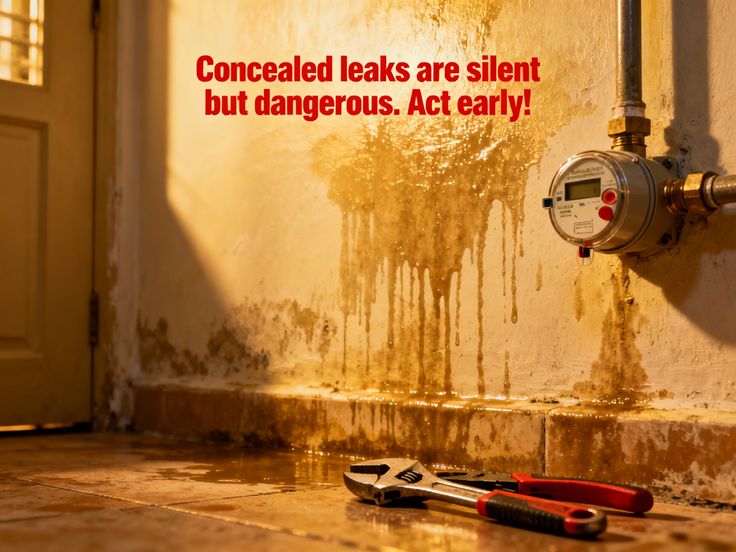
Concealed leaks are silent but dangerous.If you notice any of the 7 warning signs — from damp walls to high water bills — take action quickly.
Early detection protects your home, health and wallet.
For professional leak detection & repair in Singapore:
📞 WhatsApp: +65 8151 8857🌐 www.aotrinitysg.com


Comments