
The Pipe Leak That Starts Small But Ends in Renovation Damage
- SURESH K
- Nov 25, 2025
- 5 min read


A Silent Problem That Can Destroy Your Home From the Inside
In most Singapore homes, water pipes are cleverly concealed — behind walls, inside bathroom structures, above false ceilings, under tiles, or within cabinets. This keeps homes clean and tidy, but it also hides one of the biggest threats to your property: a small, silent water leak.
Most leaks begin in places you cannot see. A minor drip from a copper joint, a hairline crack in a PPR fitting, or moisture escaping from a loose bathroom connection may go unnoticed for weeks. By the time the first sign becomes visible, the hidden damage is already spreading.
Many homeowners make the same assumption:“It’s just a small leak — not urgent.”But in reality, a small leak rarely stays small. It grows, spreads, damages materials, weakens structures, invites mold, and eventually leads to major renovation work.
In our experience handling hundreds of concealed pipe issues across Singapore, some of the worst home damages started from tiny leaks that homeowners ignored.
Let’s break down exactly why.
Why Small Pipe Leaks Are So Dangerous
1. Most Leaks Are Hidden Until Late Stage

Because Singapore plumbing is mostly concealed, a leak rarely shows itself immediately.
Typical early signs include:
Slight ceiling bubbles
Yellow or brown water marks
Dampness behind kitchen cabinets
Musty odour
Tile lines darkening
Water droplets appearing only at certain times
Gradual drop in water pressure
When these symptoms appear, the internal leak has usually been active for a long time. Water has already:
Traveled across walls
Soaked insulation
Saturated concrete
Spread behind tiles
Entered wood or plywood
Reached electrical points
The leak is “small”, but the hidden spread is huge.
2. Water Never Stays at One Place — It Spreads

One of the biggest misconceptions is thinking water leaking at one point will affect only that spot.
But water naturally moves along:
Concrete pores
Ceiling structures
Pipe surfaces
Tile gaps
Electrical conduits
Wooden platforms
That’s why many people see water stains far away from the actual leak area. Water travels until it finds an exit point — usually the weakest area.
This is how:
A kitchen pipe leak affects the bedroom wall
A bathroom pipe leak affects the living room ceiling
A ceiling leak affects cupboards or wardrobes
A small leak may travel across multiple rooms quietly.
3. Moisture Creates Ideal Conditions for Mold

A concealed pipe leak creates a dark, warm, humid space — perfect for mold growth.
Mold can form within:
Drywalls
Ceiling boards
Behind cabinets
On wooden flooring
On insulation materials
Mold will:
Spread quickly
Create a persistent odour
Cause allergies or asthma
Damage paint and plaster
Discolour walls and ceilings
Removing mold usually requires removing affected materials — which means more renovation.
4. Carpentry Absorbs Moisture Very Fast

Materials like:
Plywood
MDF
Laminated wood
Built-in cabinet bases
Vanity units
Wardrobes
… absorb water rapidly. Once they swell, warp, crack or delaminate, they rarely return to normal. Most must be replaced entirely.
A small pipe leak behind or under cabinetry almost always results in:
Swollen base cabinets
Soft wooden flooring
Peeling laminate
Damp, smelly compartments
Weak structural frames
This leads to further replacement works, even if the leak itself was tiny.
5. Electrical Risk Is Extremely Serious

One of the most dangerous outcomes of a concealed leak is water entering electrical components.
Water can reach:
Ceiling light points
Junction boxes
Water heater switches
Power sockets
Wiring conduits
This can lead to:
Tripped circuits
Sparks
Short circuits
Component failure
Fire hazards
Once water mixes with electrical systems, additional rectification is required. This adds inconvenience, safety risks, and downtime.
6. The Longer You Delay, the Worse the Damage

This is the painful truth:A leak grows silently. Damage grows even faster.
Even if the leak rate stays the same, the moisture spread increases gradually:
More surfaces get wet
More materials weaken
More mold grows
More structures soften
More internal components deteriorate
Homeowners often notice the leak only when the damage becomes severe.
Why Do Pipe Leaks Start Small?
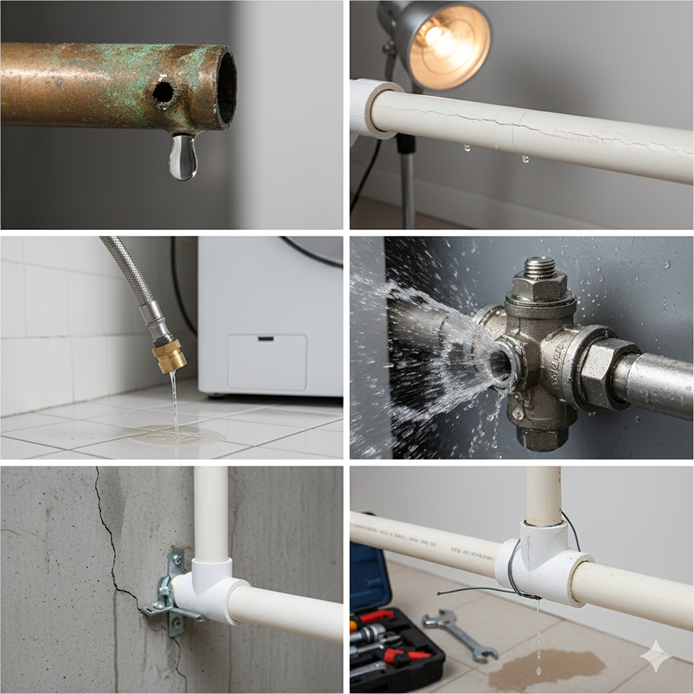
1. Aging copper or stainless pipes
Over time, metal pipes naturally develop:
Corrosion
Pinholes
Weak points
A hairline crack begins with one drop at a time.
2. Plastic pipes become brittle
PPR, PB or PVC pipes can weaken from:
Heat
Pressure
Poor workmanship
Natural aging
A minor crack expands slowly.
3. Loose or poorly sealed joints
Common around:
Bathroom mixers
Washing machine points
Heater pipes
Kitchen sink area
Vibration and movement cause slow leaks.
4. High water pressure
If PRV (pressure reducing valve) fails, pressure increases and causes joints to fail gradually.
5. Building movement
HDB and condo structures expand and contract slightly over time, stressing the pipes.
6. Faulty installation
Improper piping work is one of the main causes:
Under-tightened fittings
Wrong material
Poor sealing
Weak support
Small leaks begin much later.
Common Areas Where Small Leaks Become Big Problems

1. Behind kitchen cabinets
Water gets trapped due to lack of ventilation.
2. Under bathroom tiles
Pipes or waterproofing issues cause long-term dampness.
3. False ceilings
Aircon, heater or water supply pipes above ceilings start dripping slowly.
4. Behind washing machine points
Small drips that go unnoticed for months.
5. Inside shower mixer walls
Behind the concealed mixer, leaks are very common.
6. In riser shafts
Neighbouring unit leaks may affect your side.
Professional Leak Detection – Finding the Leak Without Guesswork

At Alpha & Omega Trinity Pte Ltd, we use systematic detection methods:
✔ Moisture scanning
Detects hidden dampness.
✔ Thermal imaging camera
Shows temperature variations caused by moisture.
✔ Pressure testing
Checks water line integrity.
✔ Acoustic listening
Listens for water movement inside walls.
✔ Visual inspection & dye test
Used for toilets and waterproofing issues.
This ensures we identify the exact cause before opening any area — preventing unnecessary hacking.
Repair Methods (Without Mentioning Any Cost)

Depending on the leak location, the repair method may include:
1. Localised opening and pipe replacement
Only the affected section of pipe is exposed and rectified.
2. Pipe rerouting
Instead of reopening entire walls or tiles, an alternative path is created for the new pipe:
Cleaner
Faster
Less disruption
3. Joint resealing
For minor accessible leaks.
4. Waterproofing restoration
If leak affects wet areas or membranes.
5. Reinstatement works
Ceiling, wall or cabinet reinstatement as needed.
How to Know if You Might Have a Concealed Leak (Quick Checklist)

✔ Water marks on walls or ceilings
✔ Musty smell indoors
✔ Higher humidity in certain areas
✔ Low water pressure suddenly
✔ Dark patches around tiles
✔ Cabinet swelling or soft flooring
✔ Mold growth at corners
✔ Sudden PUB bill increase
✔ Water marks around skirting
If you notice even one of these signs, consider a leak investigation.
How to Prevent a Small Leak from Becoming a Major Issue

1. Do not ignore early signs
A small stain or damp smell is often the first warning.
2. Do not repaint or cover stains
It hides the problem and worsens moisture.
3. Avoid drilling into walls without checking
You may hit concealed pipes.
4. Engage a professional early
This prevents unnecessary damage.
5. Conduct periodic inspection
Especially for older homes.
Final Thoughts: A Small Leak Today Can Become Tomorrow’s Renovation Nightmare

Homeowners often underestimate small leaks because they look harmless. But behind the wall, the real damage may already be spreading.
A minor drip can eventually cause:
Mold growth
Ceiling board collapse
Damaged carpentry
Bubbling paint
Electrical hazards
Structural damage
Large-scale reinstatement work
The safest and most cost-saving approach is always the same:Address the leak early, before the damage grows.
Need Professional Help with Pipe Leak Detection or Repair?

At Alpha & Omega Trinity Pte Ltd, we handle:
Concealed pipe leak detection
Ceiling/bathroom/kitchen leaks
Rerouting pipe systems
Water seepage investigation
Plumbing rectification
HDB, condo & landed homes
📞 Call/WhatsApp: +65 8151 8857🌐 www.aotrinitysg.com
We respond fast, investigate accurately, and repair professionally to protect your home


Comments