
This Burning Smell Means Your Wiring Is Already Failing
- SURESH K
- Jan 24
- 3 min read


A burning smell inside a home, office, or commercial building is never “normal.”If you notice a plastic, rubber, or smoky electrical smell near a power socket, switch, distribution board (DB), ceiling, or wall — it is a serious warning sign that something inside your electrical system is already failing.
Many electrical fires do not start with sparks or visible flames.They start quietly — with heat, insulation breakdown, and a smell that people ignore.
By the time smoke or flames appear, the damage has already progressed too far.
Why a Burning Smell Is a Critical Warning
Electrical wiring is designed to operate within strict temperature limits. When a burning smell appears, it means those limits have already been exceeded.
This is not a future risk — it is a current failure in progress.
Most commonly, the smell comes from:
Overheated electrical cables
Melting PVC insulation
Loose or corroded cable connections
Overloaded circuits
Damaged sockets, switches, or breakers
Electrical arcing hidden behind walls or ceilings
Once insulation starts degrading, the wiring loses its protective layer. Bare or weakened conductors then create heat, sparks, and eventually fire.
Common Causes Behind the Smell

1. Loose Wiring Connections
Loose terminals inside sockets, switches, or DBs create resistance. Resistance produces heat.This heat slowly burns insulation until you smell it.
This is especially common in:
Old buildings
Heavily used power points
Equipment with high current draw
2. Overloaded Circuits
Modern homes and offices use more electrical equipment than older wiring systems were designed for.
Air-conditioners, water heaters, servers, kitchen appliances, and chargers connected to the same circuit can overload it silently.
The breaker may not trip immediately — but the wiring still overheats.
3. Aging or Brittle Insulation
Electrical insulation does not last forever. Heat, humidity, and age cause insulation to harden, crack, and melt.
In concealed wiring, this damage remains hidden until a smell or failure occurs.
4. Faulty or Low-Quality Accessories
Cheap sockets, adapters, extension cords, and multi-plugs are a frequent source of overheating.
These components often fail internally long before they show visible damage.
5. Electrical Arcing
Arcing happens when electricity jumps across gaps in damaged or loose connections.It produces intense heat and can ignite nearby materials — even without visible sparks.
This is one of the most dangerous and least visible electrical faults.
Why Ignoring the Smell Is Dangerous

Many people make the mistake of:
Spraying air freshener
Opening windows
Turning the switch off temporarily
Resetting a tripped breaker
Continuing usage “to observe”
This is extremely risky.
Electrical failures do not heal themselves. They escalate.
Ignoring the smell can lead to:
Sudden total power failure
Damage to expensive appliances
Electrical shock risk
Fire spreading inside walls or ceilings
Building-wide electrical failure
Statistics consistently show that many electrical fires occur days or weeks after early
warning signs were ignored.
What You Should Do Immediately
If you detect a burning smell:
Switch OFF power at the affected socket or main DB if safe to do so
Stop using the circuit immediately
Do not reset breakers repeatedly
Do not open sockets or DBs yourself unless qualified
Arrange professional inspection urgently
Time matters. The earlier the fault is identified, the smaller and safer the rectification.
What Professional Electrical Inspection Involves
A proper inspection is not guesswork. Professionals follow a structured diagnostic process:
Load testing of circuits
Thermal inspection to identify overheating points
Checking cable termination tightness
Insulation condition assessment
Verification of breaker ratings vs actual load
Identification of hidden faults behind walls or ceilings
Only after locating the root cause can safe rectification be done.
Simply replacing a socket without addressing the underlying wiring issue often results in repeat failure.
Real-World Rectification Scenarios
In many rectification cases, technicians find:
Melted insulation inside DBs
Burnt cable ends hidden behind faceplates
Overheated neutral conductors
Breakers operating beyond their design limits
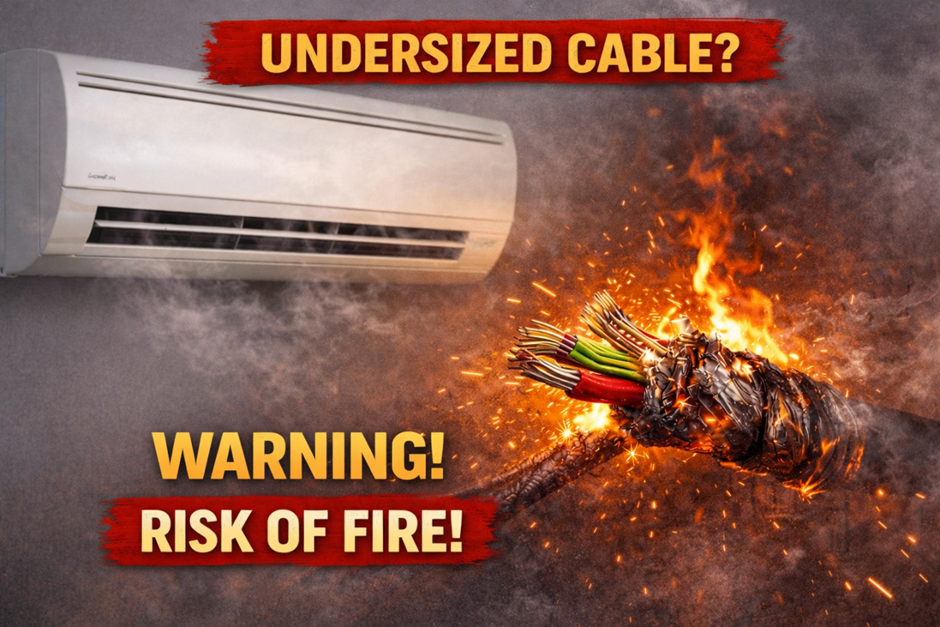
Multiple high-load appliances connected to undersized wiring
These are silent failures — invisible until something goes wrong.
Prevention Is Always Cheaper Than Repair
Early inspection and rectification typically involve:

Re-terminating loose connections
Replacing damaged cables or accessories
Load redistribution across circuits
Upgrading protection devices
Once a fire occurs, costs multiply dramatically due to:
Fire damage
Smoke contamination
Insurance complications
Business downtime
Safety investigations
Preventive action protects lives, property, and peace of mind.
Final Word: Trust the Warning
A burning electrical smell is your system asking for help.
It is not an inconvenience.It is not “normal heat.”It is not something to monitor later.
It is a failure already in progress.
Act early. Act safely. And always involve qualified professionals.
Need a Professional Electrical Inspection?
📞 Call / WhatsApp: +65 8151 8857🌐 www.aotrinitysg.com.comAlpha & Omega Trinity Pte Ltd
⚡ Electrical problems don’t fix themselves — they escalate


Comments