
Top Safety Tips for Water Heater Maintenance and Usage
- SURESH K
- Nov 19, 2025
- 5 min read


Essential Guide for Every Home & Facility in Singapore
A water heater is one of the most heavily used appliances in any home, commercial building, or facility. Whether it’s a storage heater, instant heater, gas heater, or centralised system, it quietly works in the background—until something goes wrong. And when water heater issues happen, they usually come with bigger risks: scalding, leaks, electrical faults, pressure buildup, and even tank bursts in severe cases.
In Singapore, most households rely on electric storage or instant water heaters. These systems are built to be safe, but like all equipment, they need proper maintenance and safe usage habits. Ignoring these essentials can lead to dangerous situations, higher electricity bills, and costly repairs.
This blog covers the top safety tips for maintaining and using water heaters—written in simple, practical terms so any homeowner or property manager can follow. Whether you're using a Rheem, Joven, Ariston, Panasonic, Rubine, or any other brand, these guidelines apply across the board.
1. Always Check for Leaks — Even Small Ones Matter

A small drip today can turn into a major problem tomorrow. Leaks often start with worn-out rubber washers, loose connections, faulty valves, or internal tank corrosion.
Why leaks are dangerous:
Water near electrical components can cause sparks or short circuits
Minor leaks can damage walls, cabinets, ceiling panels
Continuous dripping increases your utility bills
In storage heaters, leaks are often early signs of tank failure
What you should do:Inspect the heater area once a month. Check the inlet and outlet joints, drain valve, and temperature & pressure relief (T&P) valve. If you see moisture, rust trails, or dripping, get a technician to diagnose it quickly.
2. Test the T&P Valve (Safety Valve) Regularly

The Temperature & Pressure Relief Valve (T&P Valve) is the most critical safety component in storage heaters. Its purpose is to release excess pressure so the tank doesn’t become a “pressure bomb.”
If this valve fails, the tank can burst.
Recommended safety practice:
Test the T&P valve once every 3 to 6 months
Lift the valve lever to ensure it releases water
If no water comes out or the valve is stuck, call a certified technician to replace it
Signs of a faulty valve:
Continuous dripping
No discharge during testing
Rust around the valve area
Never bypass, remove, or block the T&P valve.
3. Set a Safe Temperature — Avoid Scalding Accidents

Water heaters should not be set too high. Scalding injuries happen in seconds, especially for children or elderly family members.
Recommended settings:
Storage heaters: 50–60°C
Instant heaters: Follow manufacturer’s recommended mid-range setting
If you smell burning plastic or notice extremely hot water, your thermostat may be faulty—a serious safety hazard that requires immediate servicing.
4. Ensure Proper Electrical Wiring and Isolation

Many water heater accidents are caused by unsafe electrical connections.
A safe installation must include:
A dedicated circuit for the water heater
Properly rated MCB or RCBO
Functional isolator switch outside the bathroom
Proper earthing and bonding
Waterproof (IP-rated) connections
Never operate a heater with exposed wires, burnt smell, or a malfunctioning switch.
If your isolator is warm or making noise, switch off the heater immediately and call a licensed electrician or plumber.
5. Don’t Ignore Strange Sounds or Smells

Sounds like popping, boiling, or cracking indicate:
Sediment buildup
Overheating
Electrical issues
Faulty heating element
Burnt smells usually point to electrical faults or melting insulation—both serious risks.
If you experience any of these warning signs:
Turn the heater OFF
Do not attempt DIY repair
Schedule a professional inspection
6. Maintain Good Water Pressure
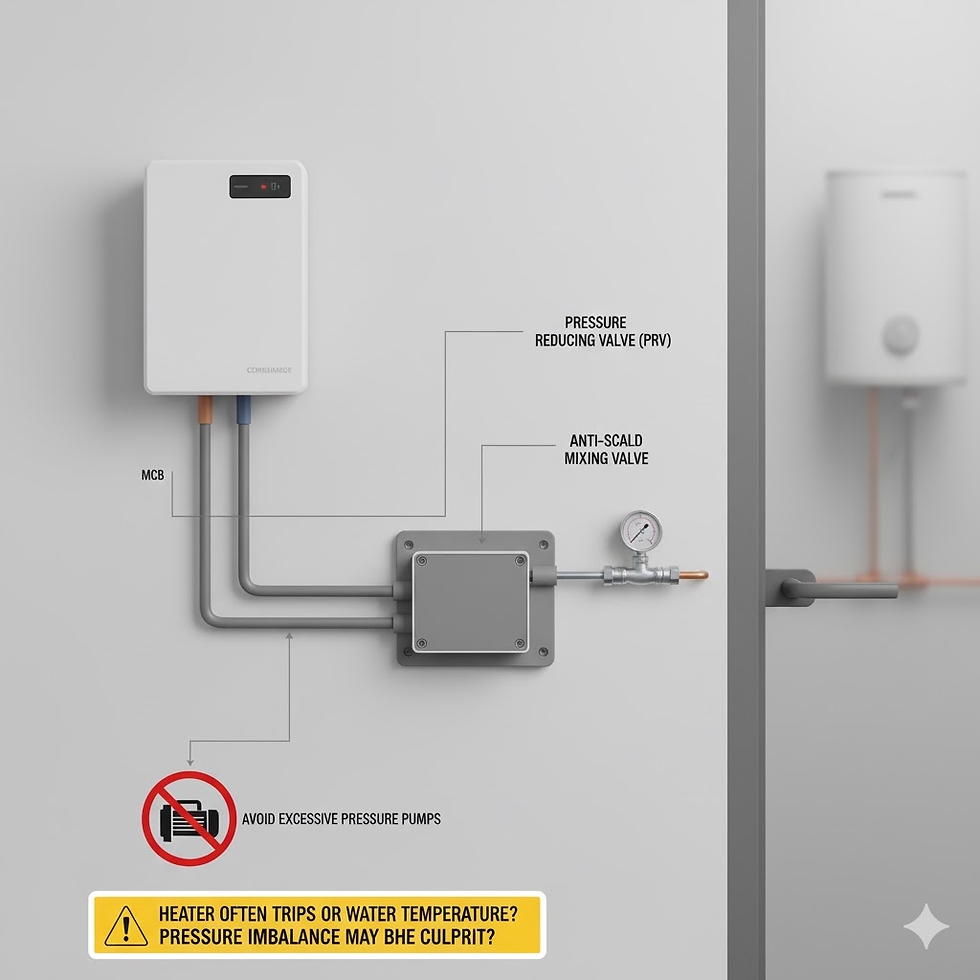
Many users don’t realise that pressure plays a major role in heater safety. Excessive water pressure stresses internal parts and valves.
Key tips:
Install a proper pressure-reducing valve (PRV) if your area has high water pressure
Ensure anti-scald mixing valves are working
Avoid using pumps that exceed recommended pressure
If your heater often trips or water temperature fluctuates, pressure imbalance may be the culprit.
7. Descale and Clean Your Heater Yearly

Singapore’s water is clean but still contains minerals. Over time, sediment accumulates inside storage tanks and heating elements.
Effects of neglecting descaling:
Reduced heating efficiency
Higher electricity bills
Overheating
Shortened heater lifespan
Noise during operation
Most manufacturers recommend yearly servicing. A proper maintenance includes:
Flushing the tank
Checking heating element
Inspecting thermostat
Verifying safety valves
Cleaning sediment buildup
Instant heaters also need cleaning to ensure proper water flow and safe temperature regulation.
8. Replace Old or Expired Water Heaters

Nothing lasts forever — especially water heaters.
Average lifespan:
Storage heaters: 7–10 years
Instant heaters: 5–8 years
Signs your heater needs replacement:
Rusty water
Frequent tripping
Heater leaks
Inconsistent temperature
Visible corrosion
T&P valve discharging frequently
Using an old heater increases the risk of:
Electrical failure
Tank rupture
Major leaks
Scalding water surges
If your heater is older than 10 years, get a professional to assess it.
9. Keep the Area Around the Heater Clear

Clutter around heaters may cause:
Fire hazards
Heat buildup
Blocked ventilation (especially for gas heaters)
Difficulty during emergency shutoff
Make sure the space around the heater is dry and unobstructed.
Never place detergents, chemical bottles, or clothes near the heater—heat may cause these items to deform or leak.
10. Install Only Through Licensed or Certified Professionals

Water heater installation may look simple, but it involves:
Electrical safety
Pressure balancing
Plumbing alignment
Proper anchoring
Compliance with Singapore regulations
Improper DIY installation can lead to:
Leaks inside walls
Unsafe wiring
Incorrect T&P discharge systems
Structural damage to tiles or ceilings
Hiring qualified installers ensures:
Warranty remains valid
Safety devices are installed correctly
Proper testing & commissioning
Compliance with PUB, HDB, and electrical standards
11. Know When to Switch Off the Heater

Storage heaters do not need to be switched on 24/7. Overrunning the system increases:
Wear and tear
Risk of overheating
Higher electrical bills
General best practice:
Turn on 10–15 minutes before bathing
Switch off after use
Do not leave the heater on overnight
For instant heaters, always ensure the power is off before cleaning or adjusting fittings.
12. Conduct Scheduled Inspections for Landlords & Facility Managers

For commercial buildings, hotels, dormitories, gyms, and hospitals, heaters run at a much higher frequency. Scheduled inspections reduce risk and downtime.
A proper inspection checklist should include:
Visual checks for leaks
Electrical integrity check
Testing all safety valves
Measuring tank pressure
Thermostat and element health
Pipe insulation condition
T&P valve discharge piping
AOT can help prepare customised checklists for your facility if needed.
13. Never Cover or Wrap the Heater Improperly

Some users cover heaters to “make them look neat.” This is dangerous because covering:
Traps heat
Blocks vents
Damages wiring
Overstresses components
Only use approved insulation materials on exposed pipes—not on the heater body.
14. Be Cautious with Shower Accessories

Adding rain showers, mixers, or diverters without checking heater compatibility may:
Affect water pressure
Cause temperature fluctuations
Overload the pump
Damage the heater
Always check with a technician before upgrading bathroom accessories.
Final Thoughts — Safety First, Comfort Always
Water heaters provide daily comfort—but they must be treated with respect and maintained responsibly. A well-maintained unit is safer, more efficient, and more cost-effective.
Following the above tips helps you:
Prevent electrical risks
Avoid leaks and bursts
Maintain stable hot-water supply
Extend heater lifespan
Keep your family or tenants safe
If you ever feel unsure, it’s always safer to call a professional.
Need a Safe Water Heater Installation or Servicing in Singapore?

Alpha & Omega Trinity Pte Ltd (AOT) offers:✔ Storage heater installation✔ Instant heater installation✔ Full descaling & maintenance✔ Temperature & pressure valve replacement✔ Ceiling concealed heater servicing✔ Emergency leak repair✔ Professional inspection reports
📞 Call/WhatsApp: +65 8151 8857🌐 www.aotrinitysg.com✔ Licensed, insured & experienced technicians


Comments