
Your Main Pipe Could Burst Without Warning — Serious Structural Damage
- SURESH K
- Nov 26, 2025
- 5 min read

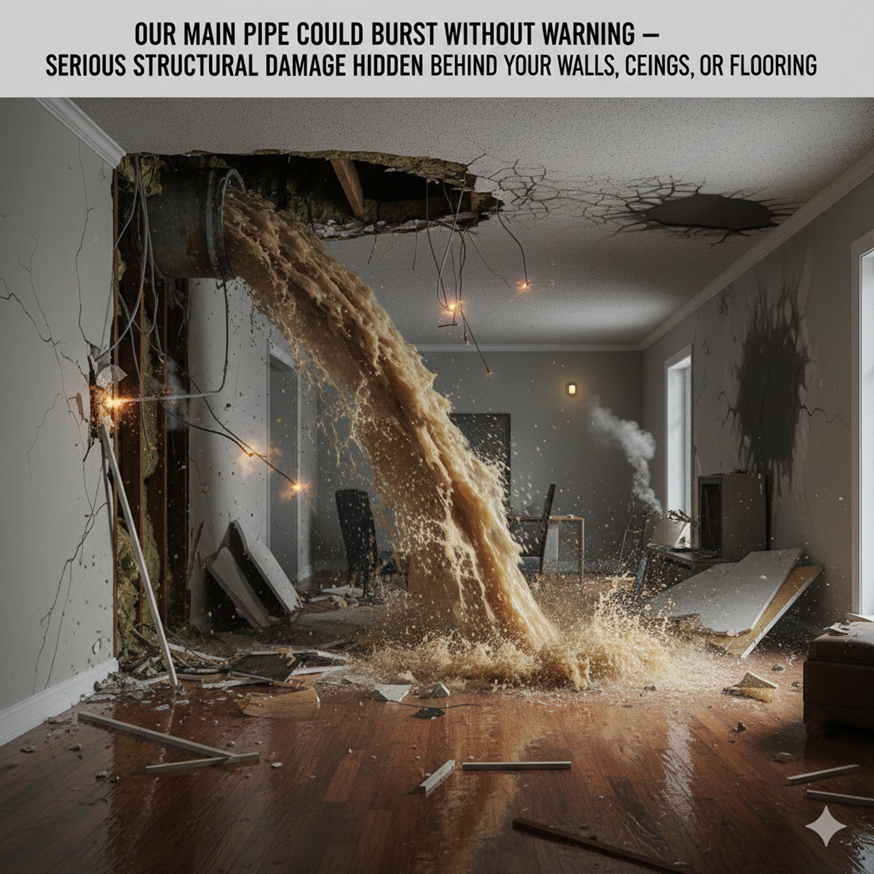
Hidden behind your walls, ceilings, or flooring lies a silent danger that many homeowners never think about — your main water pipe. This pipe is responsible for carrying clean water throughout your entire home. When it fails, it doesn’t give you a polite warning. It bursts suddenly, violently, and causes severe damage within minutes.
Unlike visible plumbing issues like a dripping tap or clogged sink, a concealed pipe burst is one of the most serious and disruptive emergencies a homeowner can face. In high-rise environments like HDBs and condominiums, the consequences can spread beyond your own unit, affecting neighbours below, electrical systems, flooring, and even structural components of the building.
This blog will help you understand why main pipes burst, what early signs you must watch for, the full extent of damage caused, and most importantly, how to prevent such a disastrous incident.
1. Why Main Pipes Burst — The Hidden Reasons Behind Sudden Failures

A pipe does not burst randomly. It is always caused by underlying issues that slowly weaken the pipe over time, until it cannot handle the pressure anymore.
1.1 Internal Corrosion
Over years of water flow, minerals, chemicals, and impurities in the water begin to corrode the inside of metal pipes. The pipe walls become thin and weak. When pressure builds up, they can split open suddenly.
1.2 Excessive Water Pressure
In many Singapore residential buildings, booster pumps regulate water pressure. If these pumps surge or malfunction, pressure inside the pipe may spike. A weak pipe cannot withstand this sudden force.
1.3 Poor Installation Practices
If the original contractor did not follow PUB standards — using low-grade pipes, improper joining, insufficient support, or tight bending — the pipe’s lifespan becomes shorter.
1.4 Micro Cracks & Slow Leaks
A tiny pinhole leak inside the wall may look harmless, but it signals internal pipe weakness. These micro cracks expand over time until the pipe bursts wide open.
1.5 Building Movement
All buildings shift slightly due to heat, humidity, and structural stress. Over the years, this movement can strain your pipe joints and cause them to weaken or crack.
1.6 External Vibration
Renovation drilling, hacking, or mechanical vibrations from nearby equipment can damage concealed pipework.
2. Early Warning Signs — Recognize Them Before a Burst Happens

The most dangerous thing about concealed pipes is that the signs are usually subtle. Most people ignore them, thinking the issue is minor. These early symptoms are actually your home’s way of telling you something is wrong.
✔ Water Marks or Yellow Stains
If your wall or ceiling shows water marks, it means moisture is leaking from somewhere behind.
✔ Unexplained Damp Smell
Dampness behind a wall is often a sign of a small leak that has been there for a long time.
✔ Sudden Drop in Water Pressure
If your showers or taps suddenly have lower pressure, a crack in the pipe could be restricting water flow.
✔ Hissing or Dripping Sound
Hissing behind the wall when no tap is open is a strong sign of a concealed leak.
✔ Mould or Fungus Marks
Moisture trapped behind the wall creates mould growth, especially in corners or ceiling edges.
✔ High Water Usage
If your usage pattern is the same but your bill increases, water may be escaping through a concealed pipe.
When you notice even one warning sign, do not wait. A weak pipe can burst anytime — especially when you are not at home.
3. What Happens When a Main Pipe Bursts — The Real Damage

A pipe burst is not like a small leak. It is forceful and destructive. Water flows out at high pressure, flooding everything in its path.
3.1 Rapid Flooding
Within just a few minutes, an entire room or hallway can be filled with water. Furniture, carpets, and personal belongings become soaked and damaged.
3.2 Structural Damage
Water can seep into concrete slabs, ceilings, beams, and walls. If not handled immediately, this moisture weakens the structure and creates further issues such as spalling or cracks.
3.3 Electrical Hazards
Water reaching electrical points or wiring creates a high risk of short circuits and electrical fires. Power often must be cut off for safety.
3.4 Damage to Built-In Furniture
Carpentry absorbs water quickly. Wardrobes, kitchen cabinets, and wooden fixtures can warp, swell, and become unusable.
3.5 Damage to Flooring
Laminate and vinyl flooring can lift and bubble. Tiles may loosen due to moisture trapped underneath.
3.6 Impact on Neighbours Below
In high-rise units, water will eventually seep down to the lower floors. This can lead to disputes, claims, and unnecessary stress.
3.7 Mould Growth
Moisture trapped inside walls becomes a breeding ground for mould, which affects air quality and health.
A burst pipe is not just a repair job — it becomes an entire restoration project.
4. Why Ignoring Small Leaks Is Dangerous

Most pipe burst cases start with small signs: a tiny wet patch, a slight damp smell, or a bit of mould on the wall. Many homeowners delay checking because they assume it is “just condensation” or “nothing serious.”
But concealed leaks rarely fix themselves. Instead, they worsen slowly until the pipe finally gives way. Ignoring the early signs is the biggest reason burst pipes cause massive damage.
5. How to Prevent a Main Pipe Burst — Simple but Effective Measures

Prevention is always cheaper, safer, and less stressful than dealing with emergency flooding.
5.1 Get a Professional Inspection
A licensed plumber can detect pipe weaknesses before they become disasters. Regular checks once every year or two are highly recommended.
5.2 Ensure Your Water Pressure Is Regulated
If your pressure is too high, the plumber may recommend installing or servicing a Pressure Reducing Valve (PRV).
5.3 Replace Old or Rusted Pipes
Pipes that are 15–25 years old are more prone to corrosion and cracking. Replacing them early prevents future failures.
5.4 Use Proper Leak Detection Tools
Thermal imaging, acoustic sensors, and moisture meters allow plumbers to find leaks without hacking your walls blindly.
5.5 Avoid DIY Repairs
Temporary fixes like tape, glue, or patching will not hold under pressure. Only licensed plumbers should handle main pipelines.
5.6 Be Cautious During Renovation
Inform contractors where your pipes run. Many pipe bursts happen due to careless drilling.
5.7 Check Your Valves Regularly
Your main stop valve should always be functional so you can shut off water quickly during emergencies.
6. Why Engage a Licensed Plumber in Singapore

Main pipe issues require skill, experience, and the right tools. Licensed plumbers:
✔ Follow PUB standards✔ Identify leaks accurately✔ Perform proper pipe replacement✔ Provide workmanship warranty✔ Help prevent future bursts✔ Ensure long-term safety
At Alpha & Omega Trinity Pte Ltd, we have extensive experience handling concealed pipe leaks, main pipe replacements, and emergency plumbing works across Singapore.
Final Thoughts
Your main water pipe may be hidden, but the danger is real. A burst pipe can create serious structural damage, electrical hazards, and stress for you and your neighbours. The key is early detection. Never ignore small signs — they are your warning before something major happens.
Taking proactive steps today ensures your home remains safe, dry, and comfortable.
Contact Us (Singapore Licensed Plumbers)
Alpha & Omega Trinity Pte Ltd📞 Call/WhatsApp: +65 8151 8857🌐 www.aotrinitysg.com🛠 Plumbing • Leak Detection • Main Pipe Replacement • Emergency Plumbing


Comments