
Your Riser Pipe Could Be Corroding — High-Rise Water Leak Risk
- SURESH K
- Dec 10, 2025
- 4 min read


In high-rise buildings, many essential systems are hidden behind walls, ceilings, and service risers. One of the most critical among them is the riser pipe—the main vertical pipe responsible for distributing water to every floor. Because riser pipes remain concealed and rarely checked, they often become a silent danger point. When corrosion begins, the damage does not appear immediately, but once it does, the consequences can affect multiple levels of the building at the same time.
This blog explains why riser pipe corrosion is a growing issue, how to identify the warning signs, what risks it brings to homeowners and property managers, and how professional inspection and maintenance can prevent costly water damage.
1. Why Riser Pipes Corrode in High-Rise Buildings

Riser pipes are constantly exposed to internal water pressure, temperature variations, and external humidity within shafts. Over time, these factors accelerate wear and tear. Common reasons for corrosion include:
a) Age of the Building
Older buildings often use GI (galvanised iron) or mild steel risers. After 15–25 years of service, protective layers wear off, allowing oxidation to begin. Once corrosion starts, it spreads quickly due to the continuous presence of water.
b) Moisture in the Riser Shaft
Even small leaks, condensation, or poor ventilation inside the riser shaft create a humid environment. This trapped moisture attacks the outer surface of the pipe, causing external corrosion.
c) Water Quality Issues
High mineral content, sediment, and chemicals in water gradually weaken the inside of the riser pipe. Over time, this leads to internal pitting, blockages, and eventual rupture.
d) Pressure Surges
High-rise buildings require powerful pumps to deliver water to upper floors. Sudden pressure spikes stress the riser pipe joints and accelerate degradation.
e) Poor Original Installation
If the riser pipe was installed without proper alignment, support brackets, or corrosion-resistant materials, it ages much faster and becomes more vulnerable to leaks.
2. Warning Signs Your Riser Pipe May Already Be Corroding

Corrosion usually starts quietly, but the symptoms become noticeable as the pipe weakens. Watch out for these early indicators:
• Rust stains on ceilings or walls
Brownish stains near pipe routes often signal water seepage from a corroded riser.
• Drop in water pressure
If residents on higher floors complain of weak flow, internal rust buildup may be restricting the pipe diameter.
• Discoloured or metallic-tasting water
When internal corrosion flakes mix with water, they cause yellowish or rusty water from taps.
• Damp patches or peeling paint
Moisture escaping from the pipe travels through the wall, causing bubbling paint or damp surfaces.
• Higher water bills
Even a small leak inside the shaft can waste hundreds of litres per month—leading to unexplained bill increases.
• Noise inside the walls
Aging riser pipes sometimes create knocking sounds due to loose brackets, pressure surges, or pipe movement caused by thinning metal.
If any of these appear, it’s likely that corrosion has already started and requires immediate professional attention.
3. What Happens If You Ignore Riser Pipe Corrosion

Many building owners delay riser pipe repairs because the pipes are hidden. Unfortunately, corrosion doesn’t stop—it accelerates.
a) Sudden Pipe Burst
Once the metal becomes thin, even normal water pressure can cause a rupture. This can flood multiple units within minutes.
b) Damage to Several Floors
Water flows downward through walls, service risers, lift lobbies, and electrical rooms. Repairing this can cost tens of thousands of dollars.
c) Electrical Hazards
Leaking water coming into contact with electrical risers or DB panels can cause short circuits or fire risks.
d) Structural Damage
Long-term moisture weakens concrete, corrodes rebar, and damages wall structures.
e) Legal Liability
If a pipe bursts and affects other units, the management or homeowner may be liable for repairs, inconvenience claims, and insurance excess costs.
f) Water Contamination
Internal rust buildup causes poor water quality, affecting showers, washing machines, and even water heaters.
A small, unnoticed patch of corrosion today can become a multi-floor disaster tomorrow.
4. How Professionals Inspect Riser Pipes
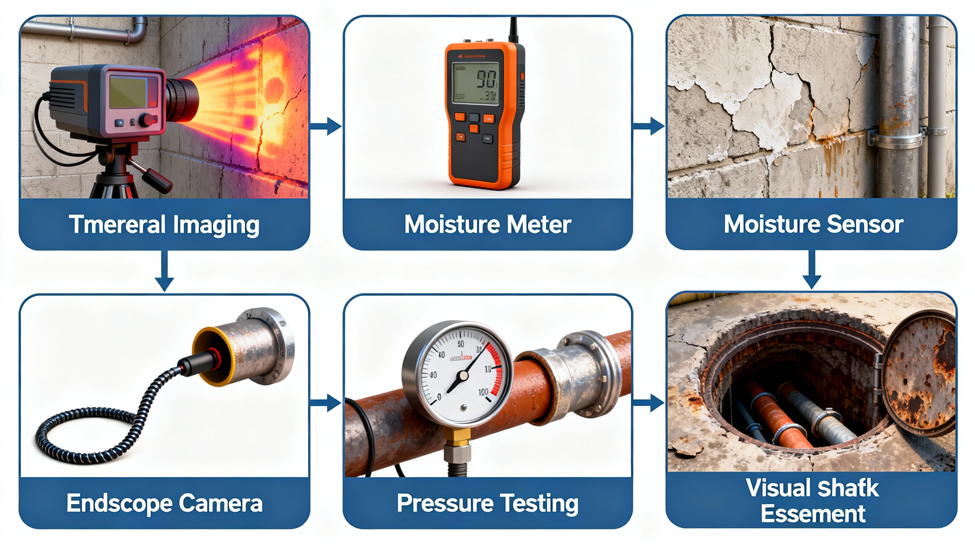
Since riser pipes are concealed, professional inspection uses a systematic approach:
a) Thermal Imaging
Heat signatures can reveal hidden leaks behind walls.
b) Moisture Meters
Used to detect damp areas without opening walls.
c) Endoscope Camera
A small camera is inserted into inspection openings to check pipe condition.
d) Pressure Testing
Technicians monitor pressure stability to identify potential weaknesses or micro-leaks.
e) Visual Shaft Assessment
Opening the riser shaft to assess pipe supports, corrosion levels, and surrounding moisture.
A proper inspection helps determine whether the pipe needs repair, sectional replacement, or full replacement.
5. Repair vs Replacement — Which Is Right for You?

Depending on the pipe condition and corrosion severity, there are several solutions:
✔ Sectional Repair
If corrosion affects only one joint or short segment, technicians replace only the damaged portion.
✔ Full Riser Pipe Replacement
Recommended when pipes are old, extensively corroded, or frequently leaking.
✔ Pipe Relining (Where Applicable)
Specialised internal coating applied to certain pipe types to extend lifespan.
✔ Bracket & Support Reinforcement
Improves stability and prevents pipe movement, reducing future leaks.
Professional assessment ensures the most cost-effective and long-term solution is selected.
6. Preventive Maintenance — The Key to Avoiding High-Rise Flooding
High-rise buildings should implement an annual or bi-annual riser pipe maintenance plan:
• Inspect for early corrosion• Flush sediment buildup• Check pump pressure settings• Ensure proper shaft ventilation• Replace aging fittings• Apply anti-corrosion coatings where suitable
Preventive maintenance dramatically reduces emergency breakdowns and protects property value.
7. How Alpha & Omega Trinity Pte Ltd (AOT) Helps Keep Your Building Safe

AOT specialises in high-rise plumbing systems and provides complete riser pipe care:
✔ Riser pipe inspection (thermal, visual & pressure testing)
✔ Corrosion & leakage assessment
✔ Sectional or full riser replacement
✔ PUB-licensed plumbing works
✔ BMS-ready, professional installation for condos & commercial buildings
✔ Workmanship warranty for all repair works
Whether you manage a condo, commercial building, or industrial property, our team helps prevent costly water damage before it starts.
Conclusion
Riser pipe corrosion is a hidden high-rise hazard that many homeowners overlook—until water starts dripping from the ceiling or flooding damages several units at once. Early detection and proper maintenance can save thousands of dollars, reduce downtime, prevent legal complications, and protect your building’s safety.
If you notice early warning signs or want to schedule a preventive inspection, now is the best time to act.
📞 Contact AOT — High-Rise Leak Specialists
WhatsApp/Call: +65 8151 8857Website: www.aotrinitysg.com


Comments