
Your Tank Could Collapse From Heavy Sludge Weight — And Most Buildings Don’t See It Coming
- SURESH K
- Feb 7
- 3 min read

Most people believe a water tank fails because it’s old, rusty, or poorly installed.
That’s only half the truth.
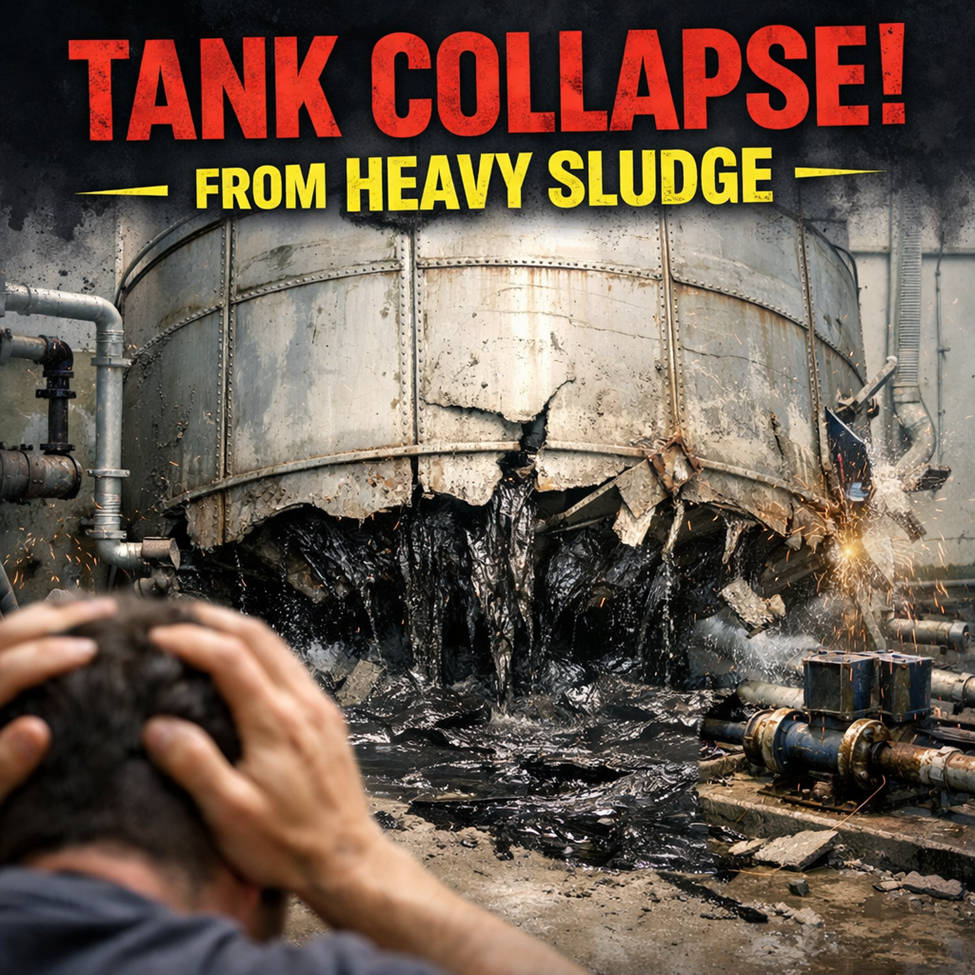
In reality, many tanks collapse or suffer serious structural damage because of something invisible from the outside:heavy sludge accumulation at the bottom of the tank.
This is a silent problem affecting residential condos, commercial buildings, factories, hotels, and even hospitals — especially in Singapore’s humid environment.
What Is Tank Sludge, Really?
Sludge is not just “dirty water.”
Over time, water tanks collect:
Sand and soil particles from incoming supply
Rust flakes from internal corrosion
Sediment from aging pipes
Biofilm, algae, and microbial growth
Scale and mineral deposits
All of this settles at the bottom of the tank, forming a thick, heavy layer.
In many tanks we inspect, sludge depth ranges from 50 mm to over 300 mm.
That weight adds up fast.
How Heavy Can Sludge Get?

Here’s what most building owners don’t realise:
Sludge is much heavier than water.
Depending on composition, wet sludge can weigh 1.3–1.6 times more than water.
Example:
A 10,000-litre tank
20% sludge volume
Extra dead load = 2–3 tonnes
That weight is:
Constant (24/7)
Concentrated at the tank base
Never considered in original structural design
The tank may look “okay” — until one day, it isn’t.
Why Sludge Causes Tank Collapse
Water tanks are designed for hydrostatic pressure, not solid dead load.
When sludge builds up:
The tank base starts to bend or sag
Weld joints and seams experience abnormal stress
Support frames deform gradually
Anchor bolts loosen
Micro-cracks form in panels or base plates
Eventually, one of these happens:
Sudden base failure
Panel rupture
Support frame collapse
Massive leakage flooding pump rooms or rooftops
And it usually happens without warning.
The Most Dangerous Part: You Can’t See It
From the outside:✔ Tank looks normal✔ No visible leakage✔ No alarm triggered
Inside:✖ Structural stress increasing✖ Corrosion accelerating✖ Sludge fermenting and producing acidic by-products✖ Water quality deteriorating
By the time leaks appear, the damage is often already severe.
Secondary Damage Most People Ignore
Tank collapse or heavy sludge doesn’t just damage the tank.
It also causes:
Booster pump failure (sludge enters suction line)
PRV, NRV, and Y-strainer choking
Pipe corrosion downstream
Frequent pump trips and motor overheating
Contaminated water reaching occupants
What starts as “dirty tank” becomes a whole system failure.
Why Regular Flushing Is NOT Enough

Some buildings rely on:
Partial draining
Overflow flushing
DIY cleaning methods
These do not remove settled sludge.
Sludge is dense and sticky.It stays at the bottom unless:
Proper isolation is done
Sludge is manually or mechanically removed
Tank base is inspected after cleaning
Skipping this step gives a false sense of safety.
How Often Should a Tank Be Desludged?
General guideline:
Residential & commercial buildings: Every 6–12 months
Industrial / high-usage systems: Every 3–6 months
Old tanks or rusty pipe networks: More frequent inspection required
But frequency alone isn’t enough.
Inspection matters more than schedule.
What a Proper Professional Tank Service Includes
A real tank maintenance job should include:
Complete isolation and controlled draining
Physical removal of sludge (not just flushing)
Internal visual inspection of base and panels
Checking for corrosion, cracks, and deformation
Cleaning and disinfection
Controlled refilling and system restoration
Anything less is a shortcut — and shortcuts lead to failures.
The Cost Comparison That Matters
Preventive desludging & inspection:✔ Predictable cost✔ No downtime✔ No emergency damage
Emergency tank failure:✖ Structural repairs✖ Water supply disruption✖ Pump replacement✖ Flood damage✖ Safety incidents✖ Complaints and liability
One option is maintenance.The other is crisis management.
Final Warning
A water tank rarely collapses overnight.
It warns silently — through sludge buildup, corrosion, and structural stress.
If you wait until leaks appear, you’re already late.
Don’t Let Sludge Decide Your Tank’s Fate

If you manage or own a building, don’t assume your tank is safe just because water is flowing.
📞 Call / WhatsApp: +65 8151 8857🌐 Website: www.aotrinitysg.com.com
Professional inspection today can prevent a collapse tomorrow.



Comments