
Your Water Heater May Melt Wiring Under High Temperature – A Hidden Danger Inside Your Ceiling
- SURESH K
- Feb 27
- 4 min read

Most homeowners believe a water heater only becomes a problem when there is no hot water.
But the real danger often happens silently inside the unit — long before the heater completely fails.
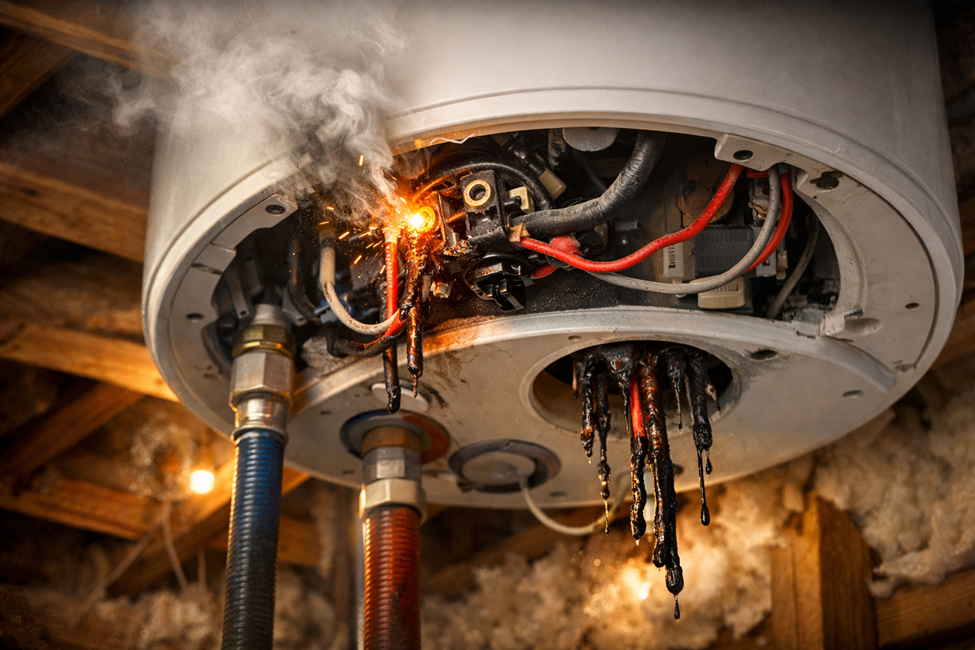
One of the most serious yet overlooked issues is internal wiring damage caused by excessive temperature. Under high heat conditions, your water heater can slowly melt its own electrical wiring. And when that happens, the risk is not just inconvenience — it becomes a serious safety hazard.
Let’s understand what is happening inside your heater and why you should never ignore overheating signs.
How a Water Heater Generates Heat
A storage water heater works using a heating element installed inside the tank. When you switch on the heater:
Electricity flows through the heating element.
The element heats up.
Heat transfers to the water stored inside the tank.
A thermostat controls the temperature and cuts off power when the desired temperature is reached.
Under normal conditions, this process is safe and controlled.
But when something fails, the internal temperature can rise beyond safe limits.
And that is where the problem begins.
What Happens When Temperature Becomes Too High?
When overheating occurs inside the heater:
• The heating element may continue heating without proper cutoff• The thermostat may fail to regulate temperature• Internal air space becomes extremely hot• Electrical terminals are exposed to prolonged heat
Electrical wires are covered with insulation material designed to withstand certain temperature ranges. However, when exposed to excessive heat over time:
• Insulation hardens• Plastic connectors deform• Terminal blocks melt• Copper wires become exposed• Internal short circuits may occur
This damage does not happen instantly. It happens gradually.
And that makes it even more dangerous.
Why Wiring Melting Is So Dangerous
Water and electricity are already a risky combination.
When wiring insulation melts inside a water heater:
Exposed copper wires may touch metal parts.
Electrical leakage can occur.
Earth leakage breaker (ELCB/RCCB) may start tripping.
Sparks may form inside the heater casing.
Fire risk increases significantly.
In severe cases, you may notice:
• Burning plastic smell• Random breaker tripping• Heater body feeling abnormally hot• Discoloured wiring during inspection• Melted terminal connectors
If ignored, this can escalate to:
❌ Electrical fire❌ Major short circuit❌ Complete heater failure❌ Ceiling damage❌ Risk of electric shock
Many ceiling-mounted heaters fail internally without any visible external sign until it is too late.
Common Causes of Heater Overheating
1. Faulty Thermostat
The thermostat controls when the heating element turns off. If it fails:
• Heater continues heating beyond set temperature• Internal components are exposed to excessive heat• Wiring suffers long-term damage
This is one of the most common causes of overheating.
2. Sediment Build-Up Inside Tank
Over time, minerals from water settle at the bottom of the tank.
When sediment accumulates:
• Heating element works harder• Heat transfer becomes inefficient• Localised overheating occurs
This stresses both the element and nearby wiring.
3. Loose Electrical Connections
Loose terminals create resistance.
Resistance generates heat.
Heat damages insulation.
It becomes a dangerous cycle.
4. Aging Heater (Over 8–10 Years)
Older heaters naturally experience:
• Insulation breakdown• Wiring degradation• Thermostat sensitivity issues
If your heater is approaching or exceeding its lifespan, risk increases significantly.
5. Improper Installation
Incorrect cable sizing, poor earthing, or low-quality connectors can accelerate overheating problems.
Professional installation is critical.
Warning Signs You Should Never Ignore
If you experience any of the following, act immediately:
• Heater switch trips randomly• Burning smell near ceiling• Heater casing feels too hot to touch• Hot water becomes extremely hot suddenly• Crackling or unusual sounds• Water leakage combined with electrical tripping
Resetting the breaker repeatedly is NOT a solution.
It only hides the problem temporarily.
Why DIY Is Not Safe
Opening a water heater without proper isolation and testing equipment is extremely dangerous.
Inside the heater:
• Live terminals may still carry voltage• Residual heat can cause burns• Incorrect reconnection may worsen the issue
Professional technicians use:
✔ Power isolation procedures✔ Insulation resistance (Megger) testing✔ Thermostat calibration checks✔ Terminal tightening and replacement✔ Load testing after repair✔ Earthing verification
Without proper tools and knowledge, inspection is risky.
Prevention Is Always Cheaper Than Replacement
Regular servicing can prevent major failures.
A proper maintenance check includes:
• Internal wiring inspection• Thermostat testing• Sediment flushing• Element condition check• Electrical insulation test
Preventive maintenance costs far less than replacing a burnt heater or repairing fire damage.
The Reality: Most Failures Are Silent
What makes this issue dangerous is that damage happens slowly.
There is no loud alarm.
No flashing warning light.
Only small signs:
A mild smell.
A single breaker trip.
A slightly hotter casing.
Until one day — the system fails completely.
Or worse.
Final Advice for Homeowners in Singapore
If your storage heater is:
• Older than 8 years• Frequently tripping• Producing burning smell• Heating excessively• Not serviced regularly
Do not delay inspection.
Electrical + Water = High Risk.
Safety should never be compromised.
Need Professional Inspection?
If you suspect overheating or wiring damage inside your water heater, act early before it becomes a fire hazard.
📞 Call / WhatsApp: +65 8151 8857🌐 Website: www.aotrinitysg.com
Alpha & Omega Trinity Pte LtdProfessional Plumbing & Water System Specialist in Singapore
Stay safe. Silent overheating today can become a serious emergency tomorrow.


Comments